

A Deep Dive into the Philippine Land Title
You’ve found your dream property. You’ve shaken hands with the seller. You might even have the keys in your hand. But let me tell you this: your ownership isn’t truly secure until the land title is officially in your name. This legal document is the single most important paper in any real estate transaction. Without it, you do not fully own the property, no matter how much you paid for it.
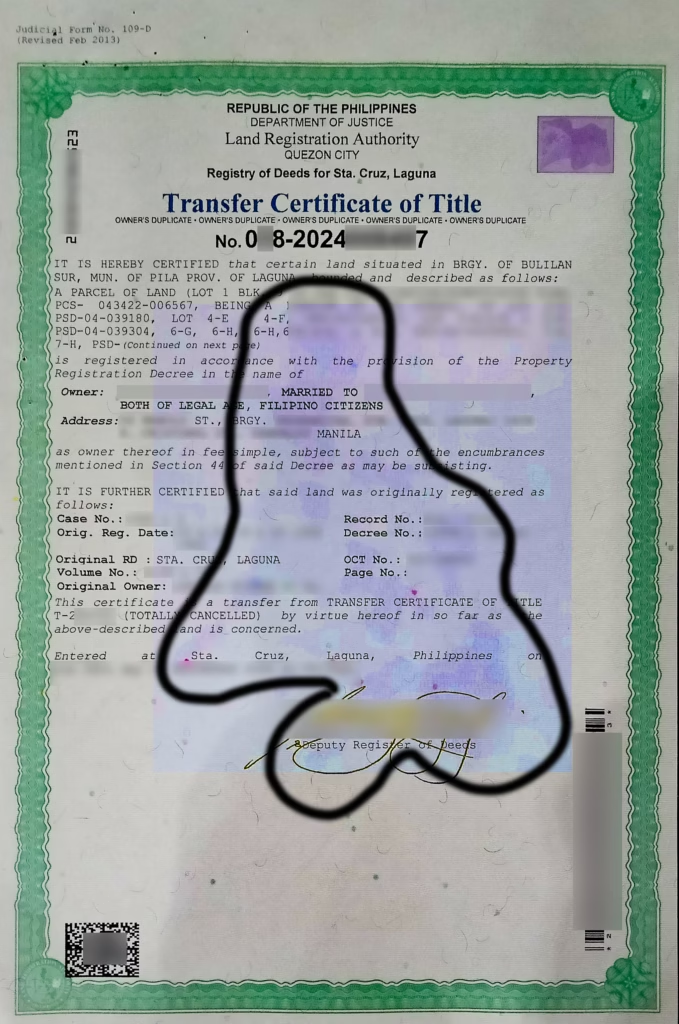
Think of the land title as the property’s official “birth certificate.” It’s a legal document issued by the government that proves, without a doubt, who the owner is. It’s the final word on ownership. This document holds all the vital information you need in one place.
- Who owns it: It clearly shows the name of the legal owner. The entire purpose of a land title transfer Philippines is to have this document updated with your name on it.
- Where it is: It describes the exact location of the property. This prevents any confusion about where the land is situated.
- Its size and boundaries: It specifies the property’s measurements. This helps prevent any disagreements with neighbors over who owns what.
- Any legal claims: It lists any “annotations,” which are notes about the property. For example, it will show if the property was used for a bank loan.
Without a title officially registered in your name, your ownership is not secure. This can lead to serious headaches if you try to sell the property later on, or if someone else tries to make a legal claim to it. A property transaction is not complete until this document is in your hands.
What is a “Clean Title”? The Most Important Question You Can Ask
A clean title is a title that has no “blemishes” or “clouds.” It is a legal document that proves the property is free from any legal problems, claims, or debts. When you have a clean title, you have the full, undisputed right to own and sell the property. This is what every buyer should demand from a seller.
A title is considered “clean” if it meets the following conditions:
-
The Owner is Clear and Unquestioned:
This means the person or people named on the title are alive and have the legal right to sell the property. There are no ongoing family disputes, and if the property was inherited, the legal paperwork (like an Extra-Judicial Settlement) is complete. It is very important to make sure the seller is indeed the rightful owner. If they are a heir, you must see the official legal documents proving they have the authority to sell.
-
It’s Free from Debts and Claims:
The title has no “annotations.” An annotation is a note on the back page of the title that records a legal claim on the property. A clean title should not have any of these:
- Mortgages: A note that the property is used as collateral for a bank loan. This must be cancelled by the bank and the annotation removed before the property can be sold.
- Adverse Claims: A claim from another person saying they have a right to the property. This is a red flag that there is a legal dispute.
- Lis Pendens: A note that there is an ongoing lawsuit about the property. This means the property is tied up in a court case and is not safe to purchase.
-
All Taxes Are Paid:
All real estate taxes (Amilyar) are paid up to date. If the property was inherited, the estate tax has been fully paid and cleared by the BIR. Unpaid taxes become the responsibility of the new owner, so it is a vital detail to check.
-
The Title Itself is Real and Not Forged:
A clean title is not a fake document. It is a genuine title issued on official paper from the government and recorded in the Registry of Deeds. Fake titles are a very real problem in the Philippines. You should always verify the title’s authenticity.
A clean title is your only guarantee that your purchase is safe. If a title is not clean, you could be buying a property with hidden debts or legal issues. You could end up spending years and a lot of money in court trying to fix a problem that could have been avoided with a simple check. This is why due diligence is so important.
A Closer Look at Your Title: The Key Details Inside
When you get a copy of the title, don’t just look at the owner’s name. Think of yourself as a detective. These are the clues that tell you the real story of the property.
The Paper Used for Security Features
The Transfer Certificate of Title (TCT) is printed on special security paper that is produced exclusively by the Bangko Sentral ng Pilipinas (BSP). This paper has several security features to prevent forgery and alteration. These features are your first line of defense against a fake document.
- Material: It is made of a mix of 50% cotton and 50% chemical wood pulp, which gives it a unique texture similar to a bank check. It isn’t like ordinary bond paper. You can feel the quality of the paper.
- Watermark: When held up to the light, a watermark of the Land Registration Authority (LRA) and a Map of the Philippines is visible. This is a very difficult feature to fake.
- Fibers: The paper contains colored silk fibers that can be seen when held against a UV light, where they should slightly shine.
- Embossing: The red and blue border around the title should be slightly embossed, not just flatly printed. You can feel the raised texture with your fingers.
- Other features: The document also has a red seal on the bottom left corner of the owner’s duplicate copy that should not blot or stain when wet.
Here’s what you should look for in the contents:
-
Title Number:

Title Number At the top of the document, you will see a unique number (e.g., “Transfer Certificate of Title No. 12345”). This is the property’s official serial number, like a Social Security Number for the land. No two titles have the same number. You will use this number to check the title’s authenticity at the Registry of Deeds. Problem: If the number doesn’t match the government’s records, it is a clear sign that the title is fake, and the transaction must be stopped immediately.
-
The Owner’s Full Name and Status:

Owner The title doesn’t just name the owner; it also includes their civil status (e.g., “MARIA CRUZ, single,” or “JUAN DELA CRUZ, married to JANE DELA CRUZ”). This is a critical detail. If the owner is listed as married, the law generally requires their spouse to give consent before the property can be sold. Problem: If the name is misspelled or the civil status is incorrect, it needs to be fixed at the Registry of Deeds and will cause major delays. More seriously, if a married seller is listed as “single” and their spouse doesn’t consent to the sale, the spouse could legally challenge your ownership later.
-
The Technical Description:

Technical Description This is a block of text that can look confusing, filled with coordinates and measurements. In simple terms, this is the property’s unique “fingerprint.” It describes the exact size, shape, and boundaries of the land as verified by a government-licensed surveyor. This section ensures that the land you see in person is the exact same land described in the document. A good surveyor can verify this for you. Problem: If the technical description in the document does not match the actual property on the ground, you could be buying less land than you think, or you might end up in a boundary dispute with a neighbor. This is a huge legal risk.
-
The “Family Tree” of the Title:

Land Title Family Tree The title will often state which title it came from (e.g., “This certificate of title is a transfer from TCT No. 98765”). This creates a traceable history of the property’s ownership. This shows a clear and clean line of ownership from the previous owner to the current one. Problem: A missing or incomplete “family tree” can be a red flag. It could mean the title is forged, or that a previous transfer (like an inheritance) was not properly documented. This “broken chain” of ownership can make it difficult for you to prove your legal rights to the property later.
-
Barcode or QR Codes:
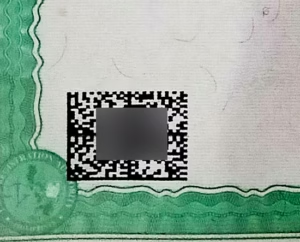
Land Title QR COde Modern e-titles have enhanced security features like barcodes and QR codes. These are for easy and immediate verification. By scanning the QR code with a dedicated application, you can instantly see if the information on the physical document matches the data in the official database of the Land Registration Authority. This is a great way to prevent fraud. Problem: If the QR code or barcode on the title does not scan correctly, or if the information it pulls up does not match the paper document, you are likely looking at a fake title. Stop the transaction immediately.
-
The “Memorandum of Encumbrances” Section:
This is arguably the most important section for a buyer to check. It’s usually on the second page. Think of it as the “notes” or “records” section for the property.
- A clean title will have this section empty. This is what you want to see. It means no one else has any registered legal claim to the property.
- If there are entries here, it means the property has an “encumbrance.” The most common example is a mortgage. If the property was used to secure a bank loan, it will be noted here. This note must be officially cancelled before the title can be transferred to you, proving the loan has been fully paid. Other entries could include a right-of-way agreement or, in more serious cases, a notice that the property is involved in a court case. When you review a title, pay special attention to the owner’s status and make sure the second page is clean. These details provide a much deeper understanding of the property’s legal health and are vital for a safe and secure purchase. Problem: Each entry here is a legal claim against the property that you will inherit. You will be responsible for resolving a mortgage, fighting a legal claim, or honoring a right-of-way.
The Different “Titles” You’ll See in the Philippines
You’ll hear a few terms thrown around, and it’s crucial to know the difference. There are really only two documents that prove ownership.
- Transfer Certificate of Title (TCT): This is the most common type of title you’ll encounter. If you are buying a piece of land, or a property with a house on it, the TCT is your golden ticket. It is the official certificate from the government’s Registry of Deeds office that confirms you are the owner.
- Condominium Certificate of Title (CCT): This is a special title for condominium units. Since a condo is a single unit within a larger building and shared property, the CCT does two things: it proves you own your specific unit, and it proves you have a share in the common areas along with the other unit owners.
The key takeaway: Always ask to see the TCT or CCT. These are the only documents that legally prove ownership in the Philippines. Other documents like a tax declaration, lot plan, or special power of attorney are important, but they do not prove ownership on their own.
Now that you understand what a clean title is, you’re ready to learn about the transfer process. Explore our blog to take the next step towards securing your ownership and completing the land title transfer Philippines process.