
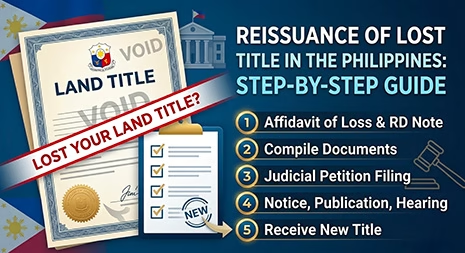
Lost Your Property Title? Here’s the Step-by-Step: How to Petition for the Reissuance of a Lost Title in the Philippines
Losing an original land title causes significant worry. Many property owners feel panic when they realize their physical copy is missing. This document proves ownership, and its loss leaves a property owner feeling exposed. You have options to fix this situation. The process involves legal steps to get a new copy.
Understanding the Difference
It is important to know that there are two ways to handle a missing title. Knowing the difference saves time and money.
- Reissuance: This is the process when the owner’s physical copy is lost, damaged, or stolen, but the official record at the Registry of Deeds remains intact and safe. This is the most common situation for homeowners.
- Reconstitution: This process applies when the official records at the Registry of Deeds are destroyed, lost, or damaged, such as during a fire or a natural disaster. This process is more complex and involves restoring the government’s master record.
Most people who lose their own copy of a title need to pursue the Reissuance process.
Immediate First Steps
You must act fast to protect your interest in the property.
1. The Affidavit of Loss This is a sworn statement where you declare under oath that you have lost your title. You must state how it was lost or destroyed. A lawyer will draft this for you, and it must be notarized. This document acts as your formal notice to the authorities that your copy is no longer in your possession.
2. Annotation of the Affidavit After you have the notarized Affidavit of Loss, bring it to the Registry of Deeds (RD) where your property is registered. You will pay the required fees to have the affidavit annotated on the original title stored at the RD.
This step is critical. It “freezes” your title. It serves as a public warning to anyone who might try to use your missing title for illegal transactions, such as selling the property without your consent or using it for a loan. Once this annotation is on the record, the RD will not process any transactions on your property without addressing this issue first.
The Judicial Process
Getting a new title is not just a simple trip to the government office. It is a court proceeding because you are asking the court to order the government to issue a new copy.
This is officially called a Petition for the Issuance of a New Owner’s Duplicate Certificate of Title. The legal basis for this is Section 109 of Presidential Decree No. 1529, also known as the Property Registration Decree.
You will need to gather specific documents to support your petition:
- Certified True Copy of the Title: You can request this from the Registry of Deeds.
- Latest Tax Declaration: This shows the current value and assessment of the property.
- Tax Clearance: This proves that all real estate taxes for the property are up to date.
- Formal Petition: A lawyer will prepare this document to be filed with the Regional Trial Court (RTC) having jurisdiction over the location of the property.
Court Hurdles and Requirements
The court needs to ensure that you are the true owner and that your request will not harm others.
- Notice and Publication After filing your petition, the court will require you to publish a notice in a newspaper of general circulation. This serves as a public announcement. It gives anyone who might have an opposing claim the chance to step forward. This is a requirement to prove to the court that the process is transparent and that no other person is claiming ownership.
- The Hearing The court will schedule a hearing. You or your authorized representative must appear before the judge to testify under oath. You will explain how the title was lost and verify the truthfulness of your petition. The judge may also ask to see the original records from the Registry of Deeds.
The Final Outcome
Once the court is satisfied with your evidence and confirms that no one else has a valid claim, the judge will issue a Court Decision or Order.
- Obtain the Order: Get a certified copy of the court’s decision once it becomes final and executory.
- Registration at the RD: Bring this court order to the Registry of Deeds. They will process the cancellation of the old, missing copy and issue a new Owner’s Duplicate Certificate of Title to you.
- Completion: Once you receive the new document, your property records are once again complete.
Professional Tips
- Keep Digital Backups: Always keep a high-quality scan of your title and save it in a secure cloud storage account. Having a clear image makes the process easier if you ever need to prove ownership details.
- Do Not Delay: If your title goes missing, take action immediately. Fraudulent claims thrive on delay. The longer you wait to register your affidavit of loss, the more vulnerable your property becomes.
- Seek Guidance: If this process sounds overwhelming, remember that you do not have to do it alone. Proper documentation is the key to protecting your real estate investment.
For further assistance with your property documentation, consultation, or to prepare your legal requirements, please reach out.
Procedural Timeline: Recovery of Ownership (Petition for Reissuance)
|
Step |
Action Item |
Estimated Timeframe |
|
1 |
Gathering & Verification |
3–7 Days |
|
2 |
Affidavit Filing & Annotation |
5–10 Working Days |
|
3 |
Drafting & Filing Petition |
2–4 Weeks |
|
4 |
Notice, Hearing, & Publication |
3–6 Months |
|
5 |
Issuance of New Title |
1–2 Months |
This timeline reflects the standard procedure, but legal hurdles can often extend these estimates. If you want to ensure your petition moves forward without unnecessary delays, I can assist you in preparing and monitoring your documents.
Are you ready to recover your ownership? Send a text with your Full Name, Property Location, and the phrase ‘Lost Title Help’ to 0929 718 4865. I will get in touch with you to perform an initial review of your requirements.